
Measuring Link Building Success Across Regions
Regional link building measurement needs segmented KPIs—referring domains by market, localized rankings, and pipeline attribution reveal what aggregates hide.
By Multilingual Link Building Agency
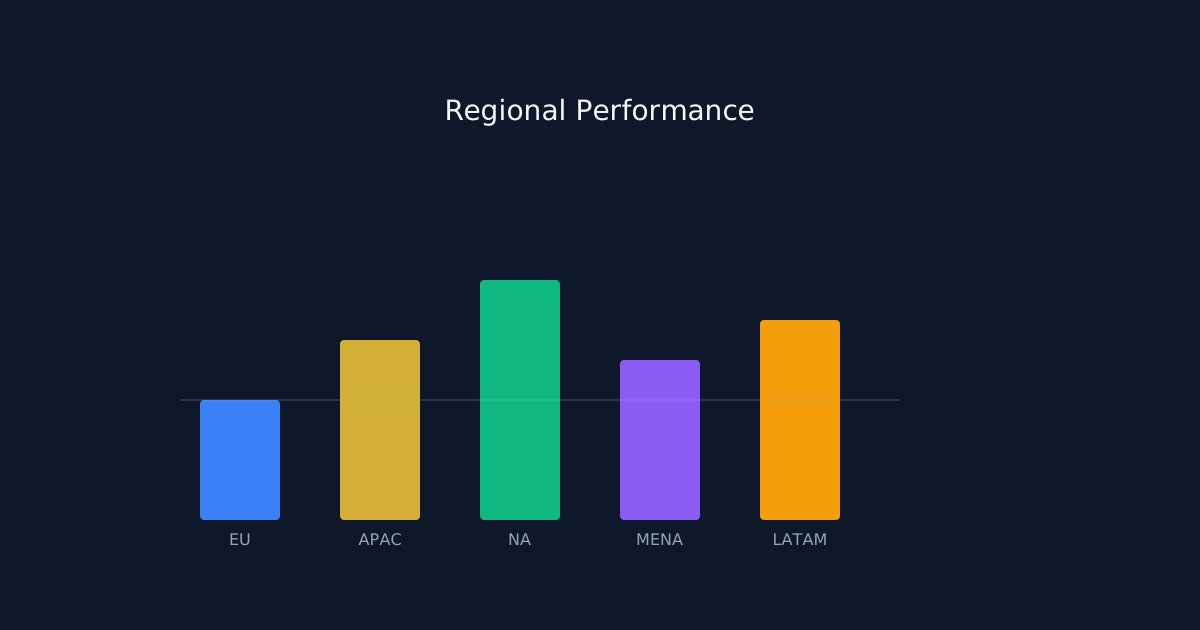
Global dashboards comfort executives with upward trends. Aggregate referring domain counts rise; Domain Rating ticks higher; organic traffic charts slope pleasantly. Then regional general managers ask why their market shows flat rankings, stagnant pipeline from search, and competitors still dominating local SERPs. Aggregate measurement lied—not through malice, but through averaging that obscures per-market reality.
Measuring link building success across regions requires instrumentation designed for multilingual, multi-market programs from the start. The metrics that matter differ by audience: practitioners need operational signals; regional leaders need market outcomes; executives need portfolio views that still drill down on demand.
Foundational Data Architecture
Before selecting KPIs, ensure data can be segmented. Requirements include:
- Google Search Console properties or filters by country and page language
- Analytics views tagging localized URL paths or subdomains
- CRM attribution capturing organic source by landing page locale
- Backlink tools exporting referring domains with country and language metadata
- Rank tracking configured for locale-specific keyword sets and search engines where relevant (Baidu, Naver, Yandex when in scope)
Without segmentation, regional measurement devolves to anecdote. Invest in tagging discipline before scaling outreach.
Establishing Baselines Per Market
Each priority market needs a baseline snapshot: referring domain count from in-country or in-language sources, rankings on agreed keyword sets, organic traffic and conversions to localized URLs, competitive backlink gap vs top three local rivals. Baselines anchor quarterly reviews and prevent debates about whether progress occurred.
Markets launch at different times; compare markets against their own trajectories, not against each other, unless maturity is comparable.
KPI Layer One: Link Acquisition Quality
Volume metrics alone mislead. Regional link KPIs should emphasize:
Referring domains by market relevance: Count domains whose primary audience and language align with target market—not all links globally.
New vs lost links: Churn matters. Markets losing editorial links while gaining directory entries show unhealthy profiles.
Topical and placement quality: Score placements against target publication lists. Flag sponsored attributes and nofollow where policy requires.
Anchor and URL distribution: Localized pages should earn branded and topical anchors naturally. Over-concentration on single URLs or exact-match anchors signals risk.
Link velocity relative to competition: Match or exceed competitor acquisition rates in markets where gap closure is strategic.
Review monthly at market level; aggregate only for portfolio summaries.
Leading Indicators
Outreach reply rates, positive response rates, and average time from first contact to live link predict future authority gains. Track by language team to diagnose process issues before rankings move.
KPI Layer Two: Search Performance
Link building ultimately serves visibility. Regional search KPIs include:
- Non-brand keyword rankings on localized SERPs
- Share of voice vs in-market competitors
- Indexed page coverage for priority localized URLs
- Featured snippet and AI overview presence where trackable
- Branded search volume growth indicating awareness
Allow lag appropriate to market competitiveness—three to six months for movement on contested terms is normal; panic at week four wastes resources.
KPI Layer Three: Business Outcomes
Executives fund link building for revenue, not links. Connect regional programs to:
- Organic sessions and conversions on localized paths
- Pipeline or revenue attributed to non-primary-language organic search
- Cost per acquired link relative to estimated organic value (methodology transparent about assumptions)
- Reduction in paid search dependency in mature markets as organic strengthens
Attribution is imperfect; document models and avoid false precision. Directional correctness over spurious decimals.
Market Maturity Adjustments
New markets may show link growth before ranking movement—set expectations accordingly. Mature markets may need fewer but higher-impact placements; measure quality over quantity.
Reporting Cadence and Formats
Weekly operational: Pipeline, outreach metrics, placements going live—by market owner.
Monthly tactical: Link KPIs plus early ranking signals—SEO and regional marketing.
Quarterly strategic: Full funnel from links to business outcomes—leadership steering committee.
Use consistent templates but allow market narrative sections explaining local context—algorithm updates, seasonal effects, competitive moves.
Common Measurement Mistakes
Relying on global Domain Rating as primary success metric. Counting links without verifying target URLs point to correct localized pages. Ignoring lost links and toxic placements. Comparing markets with different launch dates without normalization. Failing to separate brand vs non-brand performance. Reporting placements before verifying indexation and link attributes.
Another error: measuring only what tools automate. Qualitative assessments—presence in flagship regional publications, sentiment of surrounding editorial context—belong in reviews even if not dashboarded.
Benchmarking and Competitive Intelligence
Quarterly competitive backlink gap analyses per market contextualize performance. If you gained twenty referring domains but a rival gained sixty in the same period, relative position may have worsened despite absolute progress.
Track share of voice in regional media for category terms—not only search rankings—to connect link building with brand authority narratives leadership understands.
Closing the Measurement Loop
Insights should feed strategy: markets underperforming on outreach conversion get prospecting audits; markets with links but no ranking movement get content and technical SEO reviews; markets exceeding targets become playbook sources for expansion.
Measuring link building success across regions demands discipline uncomfortable for teams accustomed to single-market reporting. The effort pays off when regional leaders see their markets in data—not buried in averages—and investment in multilingual link building aligns with demonstrable cross-border SEO and commercial outcomes market by market.
Executive Summary Templates That Work
Structure quarterly leadership updates as: priority market scorecard (three to five markets maximum), portfolio trend line, competitive gap status, and resource reallocation recommendations. Avoid tables with twenty markets and fifty metrics—executives need narrative clarity. Include one qualitative highlight per region: a flagship placement, a journalist relationship opened, a localized asset that earned unsolicited links. Numbers anchor the story; examples make it memorable and justify continued investment in international SEO infrastructure.
Ready to apply these strategies to your global campaigns?
Speak to Our Strategists