
The Role of Translation in Link Equity Across Language Versions
Translation alone does not transfer link equity between language versions—hreflang and localized link acquisition remain essential for international SEO.
By Multilingual Link Building Agency
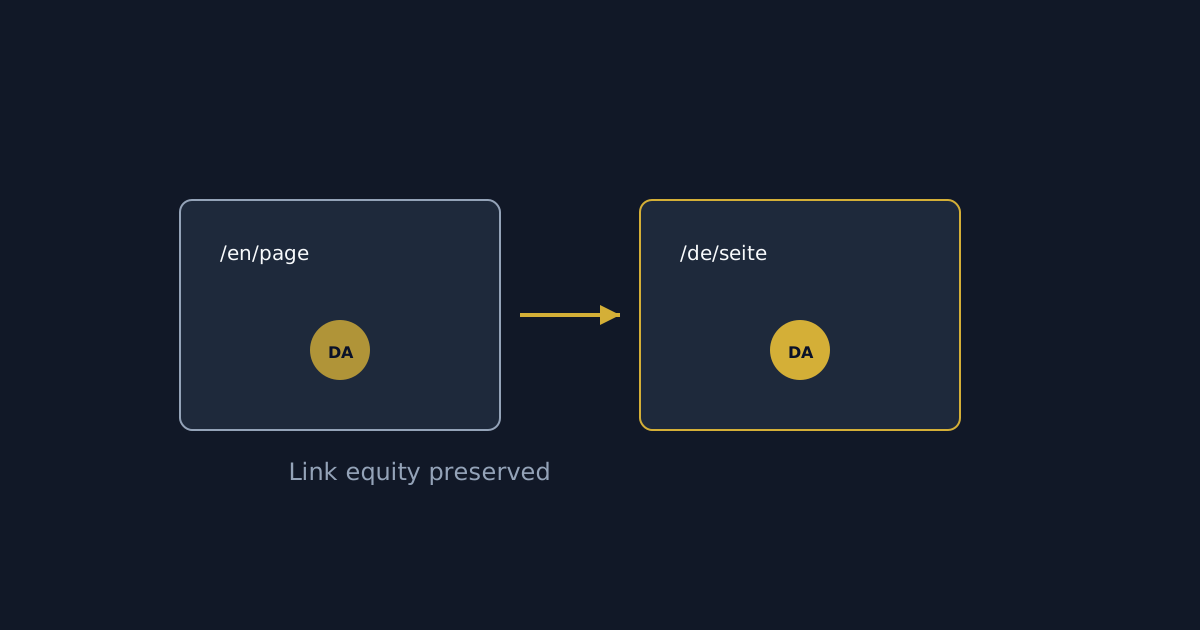
Translation sits at the intersection of content operations and search strategy, yet many organizations treat it as a mechanical step that automatically extends SEO value across markets. It does not. Translation makes content accessible; it does not make that content authoritative. Link equity—the cumulative value search engines assign based on inbound links, citation context, and trust signals—remains largely localized unless you architect for cross-language reinforcement and invest in multilingual link building alongside localization.
Understanding this distinction prevents costly misallocation: teams doubling translation spend while regional pages languish without backlinks, wondering why hreflang implementation failed to deliver rankings.
How Search Engines Relate Language Versions
hreflang annotations tell search engines which URL serves which language or region. They reduce duplicate content confusion and help serve the correct version to users. They are not a mechanism for pooling link equity across all versions into one mega-authority score distributed evenly.
In practice, each language version competes in its own SERP context with its own link graph. English links predominantly benefit English URLs. German editorial links benefit German URLs. Some cross-language benefit occurs when multinational sites earn links to homepages or language selectors, but that benefit is indirect and insufficient for competitive localized rankings.
Translation Quality Affects Linkability
Poor translation reduces link equity indirectly by making pages unworthy of citation. Editors link to resources that help their readers. Awkward phrasing, incorrect terminology, and culturally irrelevant examples signal low editorial standards. Native reviewers and subject-matter experts improve not only user experience but the probability that outreach succeeds.
Transcreation—adapting messaging for local markets rather than literal conversion—produces assets worth linking to. A translated white paper may underperform; a localized research report with country-specific data may earn coverage in trade press. Translation strategy and link building strategy should be co-designed, not sequential handoffs.
Canonical Tags, URL Structure, and Equity Flow
URL architecture influences how equity flows. Subdirectories (example.com/de/), subdomains (de.example.com), and ccTLDs (example.de) each carry trade-offs for brand consolidation, server location signals, and operational complexity. None eliminates the need for locale-specific links.
Incorrect canonicalization can consolidate equity undesirably or fragment it. Pointing localized pages to English canonicals because “English is the master” can suppress non-English rankings. Each approach requires coordination between SEO, engineering, and localization teams. Document decisions and audit quarterly.
The Limits of Cross-Linking Between Language Versions
Internal links between language versions help users and crawlers discover alternates. They do not substitute for external validation. A footer link from English blog posts to German counterparts assists discovery but carries minimal comparative weight versus editorial links from respected .de domains.
Use internal linking to support user journeys and hreflang clusters, not as a substitute for multilingual link acquisition. Over-optimizing internal cross-links while neglecting external outreach creates the appearance of international SEO without its substance.
When Translation Supports Link Equity Indirectly
Translation enables equity capture you would otherwise miss. Without localized pages, you cannot earn links to them. Product documentation in Spanish attracts links from Spanish developer communities. Support articles in French reduce reliance on English URLs ranking in French SERPs—a fragile position competitors can exploit.
Syndication and partnership agreements sometimes permit localized republishing with attribution links. Negotiate link placement explicitly in licensing terms. Monitor that partners implement hreflang or canonical correctly so equity accrues to your preferred URLs.
Aggregators, Wikipedia, and Multilingual Citations
Multilingual Wikipedia entries, industry wikis, and reference sites often link to language-specific sources. Ensure your localized pages are the best citation targets—accurate, stable URLs, updated content. Translation quality directly affects whether editors accept your page as a reference over a competitor’s local resource.
Building a Coherent Model: Translate and Earn
Treat each language version as an SEO entity requiring its own link profile while maintaining global brand coherence. Practical steps:
- Launch localized pages only when you can support ongoing link acquisition, not merely translation.
- Align hreflang and URL strategy with link building targets per market.
- Create link-worthy localized assets—not just translated blog posts but data, tools, and commentary with local relevance.
- Measure referring domains per language version separately from global totals.
- Feed translation teams editorial feedback from outreach—terms journalists use, angles that resonate.
Executive Implications
CFOs and CMOs reviewing international digital spend should see translation and link building as complementary investments with distinct ROI curves. Translation without links produces inventory. Links without quality localized content produce rejection. Together they build international SEO positions that compound.
The role of translation in link equity is enabling and amplifying—not transferring. Organizations that internalize this build multilingual sites that deserve the cross-border backlinks they pursue, market by market, with clarity about what translation achieves and what only localized link building can.
Practical Audit Questions for Leadership Teams
When reviewing international programs, ask whether each localized URL has earned at least one editorial link from a domain relevant to its target market in the past twelve months. Examine whether translated pages duplicate English structure without localized examples, statistics, or expert voices—signals that reduce linkability. Confirm hreflang clusters are complete and reciprocal. Compare referring domain growth rates across language versions against market priority rankings. Misalignment between investment and link velocity often reveals translation-heavy, link-light strategy gaps worth correcting before the next localization wave launches. Pair every localization budget line with a corresponding link acquisition plan specifying markets, targets, and success metrics. Without that pairing, translation spend produces pages that exist but do not compete. Executive sponsors should review link equity dashboards alongside localization roadmaps in the same quarterly meeting—forcing joint accountability rather than sequential blame when regional rankings underperform.
Ready to apply these strategies to your global campaigns?
Speak to Our Strategists